Thursday, December 1, 2011

Tourism in Iceland


I think it would be ideal for my last blog to be about Iceland, as most of my blogs are about Iceland. This time I would like to focus on one specific industry, the tourist industry.

There are two industries in Iceland that have benefited from the weakening of the Icelandic Króna. Those are the fishing industry and the tourist industry. Historically Iceland is a fishing nation and fish was its main export-product until 2009 when aluminium took over. On the other side the tourist industry is a lot smaller and represents 5% of Iceland’s GDP. Iceland has for a long time been known for a tourist destination, but always as really expensive. In 2008 the currency weakened by almost 50% which gave the tourist industry an endless amount of opportunities.
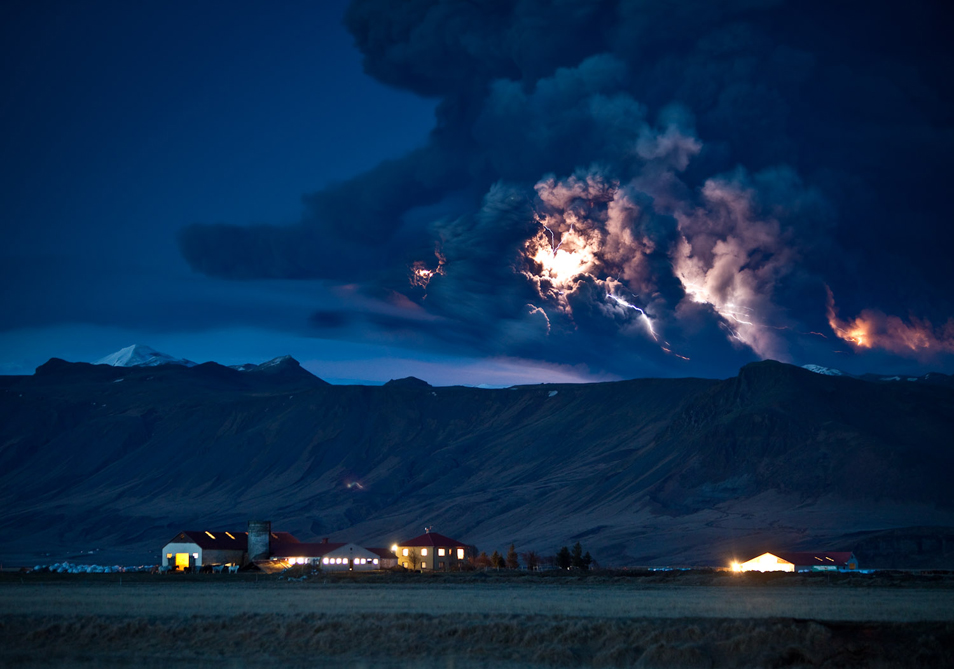


In 2010 everyone where expecting Iceland’s tourist industry to have a record year as the infrastructure was good, the economy was stable again and the currency still weak. Then a volcano called Eyjafjallajökull erupted which resulted in the largest air-traffic shut-down since World War II. That resulted in a lot of negative publicity for Iceland, and the Icelandic airport had to be closed several times during the eruption which resulted in many cancelations on tourist activities for a whole month.

Iceland has had an enormous amount of publicity through news all over the world; first for the collapse of the banking system and then for Eyjafjallajökull. In order to try to change the image of Iceland the Ministry of Tourism and the private sector launched an advertisement campaign during the summer of 2010. The campaign was really successful and showed how a small economy can be more flexible than a big economy. The nation came together and helped out in advertising and changing the image of their own country.


Now the tourist industry is going well and doing well and it looks like next year could be the best one ever. Airlines, like Easy Jet, have added Iceland to their destinations which give travellers more options and often cheaper prices.

Let’s go to Iceland! - http://www.inspiredbyiceland.com/

Further Reading:

Pictures:
http://www.discover-the-world.co.uk/school/export/sites/dtw/images/gallery/iceland/gn-northern-lights-horses.jpg_846788503.jpg

Tuesday, November 22, 2011

Argentina [2 of 2]


The newest move of Cristina Kirchner is the currency restrictions which officially targets money-laundering. After the “corralito” in 2001 when almost all bank accounts in Argentina got frozen and withdrawals from U.S. dollar dominated accounts was forbidden. Argentinians do not trust their banking system, bank vaults are common amongst the wealthier, they minimize the use of credit cards and worst of all they avoid their currency. Argentinians tend to keep all their savings in USD and all more expensive items such as cars and houses are priced in USD.

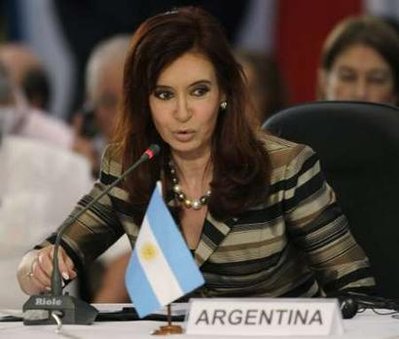
If you talk about politics in Argentina you always have to be careful who you are talking to and who is around you as it is a sensitive topic for them, just as football. Over the last 18 months I have spent over 1 year in Argentina, and I have been wondering a lot how did Cristina Kirchner manage to get over 50% of the votes?  I studied at a small private university and discussed this topic with close to 100 Argentinians and only a small percentage of them seem to like her. Then how did she get all those votes?


There are several reasons that have occurred to me but in the end it all seems to be about trust, or distrust. Argentinians trust even less in politicians than in the banks and it seems they are afraid of voting for someone else as it could be worse than Cristina. Another reason is Cristina’s policies regarding strikes and subsidies. She has gained popularity with the middle and lower class by increasing subsidies for gas, water and public transport. Regarding strikes she is a “liberalist” and protests are things that you see every day.

The most common one is “corte de ruta”, which is when protestors go into the middle of streets, roads or motorways and block all traffic. Laws do not allow the police to arrest the protestors and therefore the protests can go on forever. Currently I am stuck at the Argentina’s biggest airport Ezeiza as the migrations staff is on strike and there are few thousand passengers waiting in the check-in area. Hopefully this strike will just last for few hours as the pressure is high. Over 20 lanes are supposed to leave in the next 2 hours and passengers on arriving planes are not allowed to leave them.

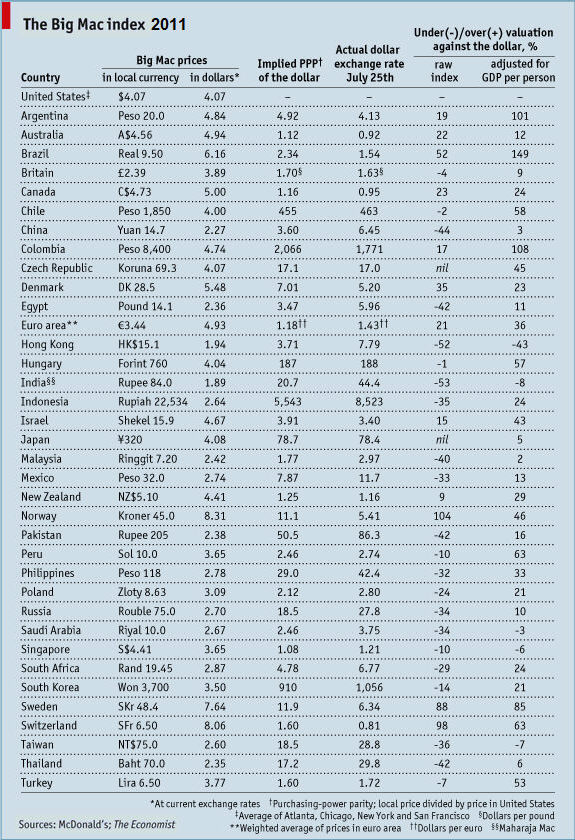
Another thing I could never understand about Argentina is McDonalds. If you go to McDonalds in Argentina you never see any advertising for Big Mac and it is only shown in small letters in a menu on the wall. The reason for that is that the Big Mac is by far the cheapest product they offer and they make less profit from it than other products. The rumour is that they have been told by the government they need to keep the Big Mac price low for the Big Mac Index (because otherwise they would have one of the most expensive Big Macs in the world). The Big Mac meal today costs just over 20 (In the index its 20 pesos but current price is 22) pesos in Argentina which is over 25% more than in London. I think that is bad enough already, but there is no other product on the menu under 30 pesos! To make it even worse we can look at the price of McFlurry; it costs 16 pesos in Argentina, which is £2.40. In Britain I cad get Big Mac (with fries and coke) for the same price, and as a student I get McFlurry for free!! How fair is that???


If Argentina manages to resolve their political and economic problems their future should be bright. Argentina covers a large area of over 2.5 million km2, which includes everything from glaciers to deserts. They have access to huge amount of natural resources like gas and petroleum. Argentina has a big potential to improve their agriculture sector, currently 25% of their total exports come from soy-beans and by-products which they mostly sell to China where it is processed further.

Sources:

Pictures:


Argentina [1 of 2]


I came to Argentina last week so I thought it would be ideal to talk about the Argentinian economy. Argentina went through a fast growth which ended with deep crisis in 2001 where the Argentine peso devaluated from 1-to-1 to almost 4-to-1 against the dollar. This led to a default of the entire economy and left it with $81 billion debt which creditors are still claiming.


In 2002 the economy shrunk by 10.9% but in the last recent years the growth has been fast and stable, with an average of over 7%. The global crisis had some affects in 2009 but it did not take long to recover. This rice in GDP has been driven mainly by the commodity boom as agricultural prodcuts represents a big part of the Argentinian economy.

Import policies have been really strict in Argentina and imported goods cost up to 3 times what they cost in the US because of high import taxes. BlackBerry opened a factory at the beginning of this year in southern Argentina and the rumour is that they did this in order to import individual pieces with lower taxes and then use the factory to put them together. Another example is a family friend which has an import company in the US and he imports goods from over 20 different countries (including many Latin American countries) but not long time ago he stopped importing from Argentina as it was the only country that he knew that had such a complicated restrictions on exports!


Cristina Kirchner was re-elected in mid-October where she won the elections with 54% of the votes which turned out to be the biggest victory in the first round of an Argentinian presidential elections since the end of the dictatorship in 1983. You would think that after 4 years of presidency and then being re-elected it would be clear that she has been doing a good job; actually it is far away from being so.

She has been criticised for hiding economic problems that might come slowly come up to the surface now after the elections. The official inflation in Argentina is really low but according to CIA World Factbook the inflation in Argentina in 2010 was 22%, which was the second highest in Latin-America after Venezuela and the third highest in the world. This can clearly be seen in Argentina, for example it is common to see stickers with new prices on menus, as prices changes so frequently they cannot be bothered to print out new menus. 

Sources:

Pictures:


Sunday, October 30, 2011

The aftermath of the Financial Crisis


The financial crisis affected every person and company in Iceland. Let’s look at the main factors and what the situation is now.

When the bank crashed in October 2008 the parliament accepted an emergency legislation. This was done in order to minimize the impact of the financial crisis. The Financial Supervisory Authority of Iceland used that law to take over the domestic operations of the three largest banks while almost all foreign operations of the banks went into receivership.


The decline of the currency against every currency was very dramatic as can be seen on the graph of the Index of ISK. It had been getting stronger for many years and at beginning of 2008 investors were realising that the currency was getting too strong and would eventually have to get weaker to balance the economy. From January to September 2008 the Icelandic króna had declined over 35% and interest rates were raised to 15.5% to deal with high inflation. On the 8th of October the Central Bank tried to peg the Icelandic króna to the Euro at 131 krónur per Euro. In less than 24 hours that attempt had failed, The Icelandic króna was then traded for 340 Icelandic krónur per Euro. The central bank set up currency restriction so the trade of the króna was not free any more. On 28th of October the Central bank had an official price of 180 krónur per Euro while the European Central bank was quoting 280 krónur per Euro. It took a long time to get a balance between the offshore market and the Central Bank price, there is still a misbalance but it is minor to what it was before. These restrictions will be slowly released but probably not completely until 2013.


Another important factor was the agreement with IMF which was signed in November 2008. This gave the Icelandic government access to foreign liquidity as international markets were really sceptic in general and especially with Iceland. The Icelandic government successfully raised 1$ billion with a bond issue on June 9, 2009. There were some doubts that such a high bond issue could not be successful shortly after the collapse, but demand turned out to be higher than supply in the end. There were some delays in the IMF programme with Iceland but they officially completed that 33 month programme in August this year.

Now Iceland has completed the IMF programme, and the economy is expect to grow more than double the Euro area average in 2011. Unemployment seems to be decreasing slowly and foreign investors are starting to show more interest in the Iceland as the economy is more stable but the currency still low. So I would say that the long term future for Iceland is quite bright even though it is a bit tough in the short term.


Sunday, October 23, 2011

The Crash of the Icelandic Banks


As I am Icelandic I thought it would be interesting to write a bit about my own economy as I have been following quite well what has been happening.

After few years of slow growth around for many years Iceland’s economy boomed and soon became one of the most overheated economies of all the OECD countries. The upswing of the economy started with Alcoa’s smelter in eastern Iceland and the corresponding construction of the Kárahnjúkar hydroelectric project. This pumped billions of dollars into the Icelandic economy fuelling both economic growth and inflation. All the country’s major banks got privatised in 2002 which is when the banks started to focus on international expansion and a riskier strategy.


In 2007 the banks’ balance sheets was almost 9 times the GDP of Iceland. Most economic indicators were fuelled by flow of foreign capital as well as through the carry trade. The economy was stretching to the limit and external debt reached 142% of GDP. 21st of February 2006 Fitch rating agency downgraded the outlook of Iceland’s sovereign debt to negative causing a widespread sell in the Króna and other assets.


In 2008 when the global financial system was shaking and it slowly became clear that the Icelandic banks were going to get into serious problem as the banks were big compared to the size of the economy and the government would not be able to help them. 15th of September of September 2008 Lehman Brothers collapsed and it became clear that the banking system had some serious problems. To make long make a long and dramatic story shorts, the economy was not too large to fail but the banks were too large to be saved by the Icelandic government. In less than a week in early October the three major banks collapsed, they represented 85% of the Iceland’s financial system.

Further reading:

Picture:

Data used in graph:


Sunday, October 9, 2011

Currency War

Currency War is a condition in international fairs that has been more commonly used since the crisis started in 2008. For a currency war to occur a large proportion of significantly big economies will have to try to devaluate their currency at once. In my last blog I looked into what has been happening in Switzerland because of the strengthening of the Franc and how the Swiss government just entered the currency war.


Historically a devaluation of a currency has rarely been a preferred strategy and at least until the 21st century, a strong currency was commonly associated with weak governments. Devaluation can lead to a reduction in the purchasing power as their standard of living is reduced both when they buy imports and when they travel abroad. As a consequence it also adds to the inflationary pressure and can make interest payments on international debt more expensive if those debts are denominated foreign currency and often discourage foreign investors to invest. Western governments hoped that this could be their magic solution to current crisis. Slowly but surely a higher number of countries have been entering the currency war, the most recent one is the Switzerland by pegging the Franc to the Euro.

As the price of one particular currency drops the real price of exports also drops. At the same time imports come more expensive therefore the domestic industry receives a boost in demand at home and abroad. This is something the Chinese government has done for long time by manipulating their currency. Over the last few years China has been criticised a lot for keeping their currency low, mainly by the United States.


Now this is a tactic that other western countries have been taking up by using QE (quantitative easing). The Bank of Japan was the first central bank in the world to use this form of policy but was followed by many other westerns countries, mostly in the US and UK. The Federal Reserve made USD$600 billion available for the purchase of financial assets to put into the system. Most recently the Swiss Franc joined the currency war by putting a floor to the Swiss Frank and not allowing it to get any stronger.


Next blog we will look into Inside Job and discuss if its reliable or not mainly by focusing on the part about Iceland as I am Icelandic

Picture:

Further reading
http://www.economist.com/node/17251850

The Swiss Franc


The economy of Switzerland is known for being one of the world’s most stable economies. Its’ stable monetary policy and political stability has made Switzerland a popular destination for investors during financial crisis. Therefore the Swiss Franc tends to rise always during financial crisis because investors lose confident in other currencies and want to invest in something secure. During the last few months people have been selling US dollars because of fear that the crisis in the US will last for longer and the economy is showing relatively negative figures quarter after quarter. In the Eurozone people have been avoiding and trying to sell euros because of the uncertainty about certain countries like Greece, Spain, Portugal and Ireland.


As seen on Euro-Swiss franc graph above the Swiss Franc has been getting stronger since the financial crisis started in 2008.

The Swiss government was running out of options and had been giving out warnings saying they would do everything in their power to keep the Swiss Franc low. On the 17th of August it was announced that the Swiss government had decided to allocate 2 billion Swiss francs to support the economy and mitigate the effect of the strong Franc.


This announcement was not enough to keep the Franc stable as can been seen on the graph so on the 6th of September the central bank decided to put an floor to the Swiss Franc. The announcement resulted in the single largest foreign exchange move that traders have seen for a long time. Against the Franc the euro rose 9%, the dollar gained 7.7% and the pound climbed 7.8% within minutes of the announcement. The Swiss government supports the Central Banks decision even though there have been some disagreements about this bold action.

Most analysts say this will have good impact on the Swiss economy. As explained in the beginning of the blog but in my next blog I am going to look at other impacts this might have for the global economy and how Switzerland just entered a currency war with Japan and other countries.


Graphs:


Further reading: